2025 Deduction Home Office Guide: Save Taxes & Style Your Space
Affiliate Disclosure: As an Amazon Associate, we may earn from qualifying purchases. This helps support HushDesk at no extra cost to you.
Readers’ Guide
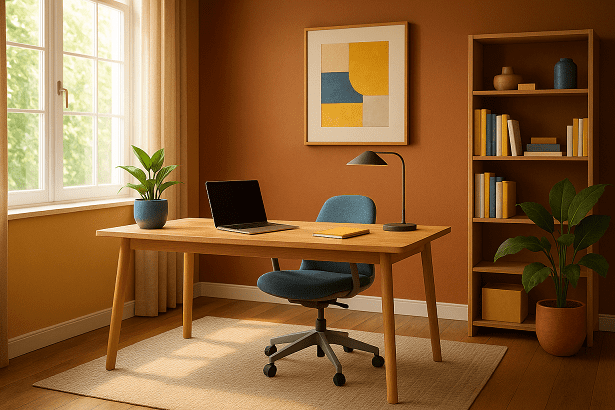
Picture this: you’re sipping coffee at your home office desk, surrounded by plants and soft lighting, tackling your daily tasks. It’s your sanctuary, but it’s also a financial investment—furniture, utilities, and maybe even a new ergonomic chair.
What if you could offset those costs with a tax break? That’s where the deduction home office comes in, a game-changer for freelancers, entrepreneurs, and self-employed folks working from home. This IRS perk lets you deduct expenses tied to your workspace, putting money back in your pocket.
At https://hushdesk.store, I’m all about creating beautiful, functional home offices that inspire productivity. But I’m also passionate about helping you save smart. In this guide, we’ll dive deep into the deduction home office, explaining who qualifies, how to calculate it, and what expenses you can claim.
Plus, I’ll share tips to design a workspace that’s as stylish as it is tax-savvy. Whether you’re a seasoned freelancer or new to remote work, this article will empower you to maximize your tax savings and craft a home office you love. Let’s get started!
What Is the Home Office Deduction?
The deduction home office is a tax benefit offered by the IRS to self-employed individuals who use part of their home exclusively and regularly for business. It’s designed to offset the costs of maintaining a workspace, from rent to utilities, making it a valuable tool for freelancers, consultants, and small business owners. Think of it as the IRS acknowledging that your home doubles as your office—and rewarding you for it.
To qualify, your home office must meet three key criteria. First, the space must be used exclusively for business—no guest rooms or multi-purpose areas. Second, it needs to be used regularly, not just occasionally. Third, it should be your principal place of business, where you conduct most of your work or meet clients. These rules ensure the deduction home office is reserved for genuine business use.
How much can you deduct? That depends on the method you choose—either a simplified flat rate or a detailed calculation based on your home’s expenses. We’ll explore both in detail later. For now, know that this deduction can cover a range of costs, helping you save significantly. By understanding the ins and outs of the tax deduction home office, you can make informed decisions and keep more of your hard-earned money. Ready to see if you qualify? Let’s break it down.
Who Qualifies for the Home Office Deduction?
The deduction home office is a fantastic way to reduce your tax bill, but not everyone can claim it. The IRS has specific rules to ensure this benefit goes to those genuinely using their home for business. Primarily, it’s designed for self-employed individuals—think freelancers, consultants, or small business owners running their operations from home. If you’re filing a Schedule C for your business income, you’re likely in the right group to explore this deduction.
To qualify, your home office must be your principal place of business, where you perform most of your work or meet clients regularly. It doesn’t have to be your only workplace, but it should be a dedicated space used exclusively and regularly for business.
For example, a corner of your living room that doubles as a TV-watching spot won’t cut it. However, a spare room or a designated desk area used solely for work fits the bill perfectly.
Unfortunately, W-2 employees working remotely can’t claim the deduction home office due to changes from the Tax Cuts and Jobs Act (2017), which eliminated this perk for employees through 2025. There are exceptions, though—if you run a daycare or store business inventory at home, you might still qualify, even without a dedicated office.
Unsure if you meet the criteria? Check IRS Publication 587 for clarity or consult a tax professional. Understanding these rules ensures you claim the tax deduction home office confidently and avoid any IRS headaches.
How to Calculate Your Home Office Deduction
Calculating your deduction home office can feel daunting, but it’s simpler than it seems. The IRS offers two methods to determine your deduction: the Simplified Option and the Regular Method. Each has its perks, so let’s break them down to help you choose the best approach for your situation.
The Simplified Option is a no-fuss choice, perfect for those who want to save time. You deduct $5 per square foot of your home office, up to 300 square feet, for a maximum of $1,500. Just measure the space you use exclusively for business, multiply by $5, and you’re done—no need to track utility bills or mortgage interest. This method is ideal if your home office is small or you prefer straightforward math.
The Regular Method, on the other hand, requires more effort but can yield bigger savings. You calculate the percentage of your home used for business (e.g., a 200-square-foot office in a 2,000-square-foot home equals 10%).
Then, apply that percentage to eligible expenses like rent, mortgage interest, utilities, and repairs. For example, if your annual expenses total $20,000 and your office is 10% of your home, you could deduct $2,000. Keep detailed records, as the IRS may ask for proof.
Wondering about Canada? In Canada, the home office deduction works similarly, but the Canada Revenue Agency allows deductions for a broader range of expenses, like a portion of property taxes.
Always consult a tax professional for country-specific rules. Whether you use a home office deduction calculator or crunch the numbers manually, both IRS methods can significantly reduce your tax burden. Choose the one that maximizes your tax deduction home office while fitting your record-keeping habits.
Eligible Home Office Expenses: What You Can Deduct
Claiming the deduction home office means knowing which expenses you can include to maximize your savings. The IRS allows you to deduct costs tied to the business use of your home, but they fall into two categories: direct and indirect expenses. Understanding these can make a big difference in your tax return.
Direct expenses are costs solely for your home office, like painting the office walls or repairing a desk. These are fully deductible, as they’re 100% business-related. Indirect expenses, however, cover your entire home but are partially deductible based on the percentage of your home used for business.
Think mortgage interest, rent, utilities like electricity and internet, homeowners’ insurance, and even depreciation if you own your home. For example, if your office is 10% of your home’s square footage, you can deduct 10% of your utility bills.
Don’t overlook smaller expenses, like cleaning services or general repairs, as long as they benefit the business portion of your home. To claim these, keep meticulous records—receipts, bills, and photos of your workspace are your best friends. The IRS may request proof, especially if your deduction home office seems unusually high.
Curious about home office expenses examples? A freelancer might deduct a portion of their Wi-Fi bill, while a consultant could include office-specific furniture repairs. For more details, check IRS Form 8829, which guides you through reporting these expenses. By tracking eligible costs, you’ll ensure your tax deduction home office is both accurate and rewarding.
Designing an Aesthetic and Functional Home Office
A well-designed home office isn’t just about tax savings—it’s about creating a space that sparks joy and productivity. As a work-from-home enthusiast, I believe your workspace should reflect your style while supporting your work.
Let’s explore how to craft an aesthetic yet functional home office, complete with product recommendations to elevate your setup, all while keeping your deduction home office in mind.
Start with lighting. Natural light boosts mood, but a quality desk lamp is essential for evening work.
The LED Desk Lamp offers adjustable brightness and color temperatures, perfect for reducing eye strain. Its sleek, minimalist design complements any decor, and its energy efficiency might even lower your utility bills—a win for both aesthetics and your tax deduction home office calculations.

- Superior Brightness Enjoy crisp, natural lighting with our office lamp, designed to enhance focus and reduce eye fatigue…
- Convenient Charging Charge your devices while you work with our desk lamp with USB charging port. The built-in 5V/1A USB…
- Fully Adjustable Customize your lighting with our nail light for desk, featuring a 180° rotating head and 90° foldable b…
Next, prioritize ergonomics. An uncomfortable chair can derail your focus. The ErgoAir Mesh Office Chair is a game-changer, with lumbar support, breathable mesh, and adjustable height. It’s ideal for long work hours, and its modern look fits seamlessly into a stylish office. Investing in ergonomic furniture not only enhances comfort but could qualify as a direct expense for your deduction home office if used exclusively for business.

- RATED THE #1 ERGONOMIC OFFICE CHAIR: Join thousands of satisfied customers who have upgraded their workspace with the Ol…
- EXPERT-APPROVED ERGONOMIC DESIGN: Engineered for all-day comfort, the ErgoAir promotes better posture with its breathabl…
- CUSTOMIZE YOUR SEATING EXPERIENCE: Tailor your comfort with adjustable height, tilt lock, and a supportive headrest. Fli…
Finally, keep your space organized. Clutter kills creativity, so consider the SimpleHouse Storage Organizer This compact shelf unit holds files, gadgets, and decor, with a wood finish that adds warmth to your office. Its versatility makes it perfect for small spaces, and organizational tools can streamline your workflow, indirectly supporting your business efficiency.

- Sliding basket for easy access in limited space and stackable design (Buy two sets and stack them together)
- No drill, no power tools needed. Just assemble the baskets and save more space
- Two drawers and the top surface hold lots stuff. Great for kitchen, bathroom and storage room organization. Gain more sp…
Choose calming colors like soft blues or greens to create a serene vibe, and add personal touches like plants or artwork. A beautiful, functional office not only qualifies for the tax deduction home office but also makes every workday more enjoyable. Explore these products to build your dream workspace, and check IRS Form 8829 for deduction details to tie it all together.
Common Myths and Mistakes to Avoid
The deduction home office can save you serious money, but myths and missteps can trip you up. Let’s clear the air and help you claim this tax break with confidence. One common myth is that taking the home office deduction flags you for an IRS audit. While the IRS does scrutinize deductions, proper documentation—like photos of your exclusive workspace and detailed expense records—keeps you in the clear.
Another misconception is that you can deduct your entire home’s expenses. In reality, only the business-use percentage of indirect expenses (like utilities or rent) qualifies. Claiming 100% of your electric bill for a small home office is a red flag. Also, don’t assume a multi-purpose space, like a dining table used for work and family dinners, meets the exclusive-use rule—it doesn’t.
A frequent mistake is poor record-keeping. Without receipts, bills, or a log of business use, your deduction home office could be disallowed if audited. Another pitfall is over-complicating calculations with the Regular Method when the Simplified Option might suffice for smaller spaces. To avoid these errors, double-check IRS guidelines in Publication 587 and maintain organized records.
Curious about how much you can deduct for business use of home? It depends on your office’s size and expenses, but sticking to IRS rules ensures your tax deduction home office is both legitimate and stress-free. Stay smart, and you’ll maximize your savings without worry.
Beyond the Home Office: Other Tax Deductions for Freelancers
The deduction home office is just the start for self-employed individuals looking to lower their tax bill. As a freelancer or small business owner, you can tap into other deductions to keep more of your income.
For instance, equipment like laptops, monitors, or even that ergonomic chair from your stylish workspace can be deductible if used for business. Internet and phone bills are also fair game, as long as you allocate the business-use portion.
Don’t overlook professional development—courses, webinars, or industry subscriptions can often be deducted. Health insurance premiums for self-employed individuals are another big one, offering significant savings.
Curious about the Section 179 deduction? It lets you deduct the full cost of qualifying equipment (like a new computer) in the year of purchase, up to a limit, instead of depreciating it over time. Check IRS guidelines to see if it applies to your purchases.
These deductions can add up, but they require careful tracking. Use accounting software or consult a tax professional to ensure you’re capturing everything.
At https://hushdesk.store, we love helping freelancers thrive, so stay tuned for our upcoming guide on freelancer tax tips [internal link placeholder]. Combining the tax deduction home office with these extras can transform your financial strategy and fuel your business growth.
Take Control of Your Taxes and Workspace
The deduction home office is more than a tax break—it’s a chance to save money while building a workspace that inspires you. From understanding eligibility to choosing between the Simplified and Regular Methods, you now have the tools to claim this benefit confidently.
Pair that with a beautifully designed home office, complete with ergonomic furniture and smart organization, and you’re set for productivity and savings.
At https://hushdesk.store, we’re passionate about helping you create a stylish, functional workspace that feels like yours. Don’t let the tax deduction home office intimidate you. Start by reviewing IRS Form 8829, keeping detailed records, and consulting a tax professional if needed.
Ready to elevate your office? Check out the recommended products we shared, like the LED Bright Desk Lamp or ErgoComfort Chair [affiliate link placeholder], to make your space shine. Subscribe to our newsletter for more tips on taxes and home office design, and take control of your freelance journey today!
Frequently Asked Qestions
Can I deduct internet costs for my home office?
Yes, if you use the Regular Method for your deduction home office, you can deduct a portion of your internet bill based on the percentage of your home used for business. Keep records to show business use.
What if I use my office part-time?
The space must be used regularly and exclusively for business to qualify for the tax deduction home office. Part-time use is fine, but non-business activities in the space could disqualify it.
Is the home office deduction available in 2025?
Yes, the deduction home office remains available for self-employed individuals in 2025, but W-2 employees cannot claim it due to the Tax Cuts and Jobs Act. Check IRS guidelines for updates.
How do I report the deduction?
Use IRS Form 8829 to calculate and report your home office expenses examples, then transfer the deduction to your Schedule C. Consult a tax professional for accuracy.